

2026 Wholesale Trends for Entryway Furniture: A Global Importer’s Guide
As urban living spaces become smaller and design‑centric, the entryway has transformed from a simple hallway into a showcase of style and function. For global furniture importers, understanding the 2026 entryway furniture wholesale trends is essential to stay ahead of demand, secure competitive margins, and build lasting relationships with manufacturers. This guide will explore the market forces shaping entryway furniture, highlight the product categories that are gaining momentum, and outline best‑practice sourcing strategies—especially when partnering with a reputable furniture manufacturer in China like Fuzhou Victor Furniture.
1. Market Overview – Why 2026 Is a Pivotal Year for Entryway Furniture
Several macro trends converge to make 2026 a breakout year for entryway pieces:
- Urbanization & micro‑living: Cities across North America, Europe, and Asia are seeing a rise in apartments under 800 sq ft. Homeowners demand compact, multi‑functional furniture that maximizes storage without compromising aesthetics.
- Eco‑conscious buying: Consumers are choosing sustainably sourced wood, recycled fibers, and low‑VOC finishes. Wholesale buyers who can certify these attributes receive a pricing premium.
- Digital showrooming: B2B buyers increasingly rely on 3D product visualizers and AR‑driven catalogs. Manufacturers that provide high‑resolution images, detailed CAD files, and virtual staging tools dominate the procurement process.
- Shift to curated collections: Retailers are moving away from stand‑alone pieces toward coordinated collections (bench + ottoman + wall hooks) that tell a cohesive story.
Understanding these forces helps importers anticipate which SKUs will move quickly and which will linger in inventory.
Key Demand Drivers by Region
North America: The “great‑reset” post‑pandemic lifestyle has increased focus on home entryways as the first impression of a private sanctuary. Retail chains demand durable, easy‑to‑clean finishes that endure high foot traffic.
Europe: Scandinavian minimalism drives demand for sleek, light‑colored benches and ottomans with hidden storage. Sustainability certifications (e.g., FSC, PEFC) are non‑negotiable.
Asia‑Pacific: Rapid middle‑class expansion fuels appetite for upscale, decorative entry pieces that blend traditional craft with modern ergonomics.
2. Product Categories Shaping the Entryway Segment
While the broad category of “entryway furniture” is simple, the sub‑categories are diverse and each offers distinct wholesale opportunities.
2.1 Storage Ottomans and Modular Seating
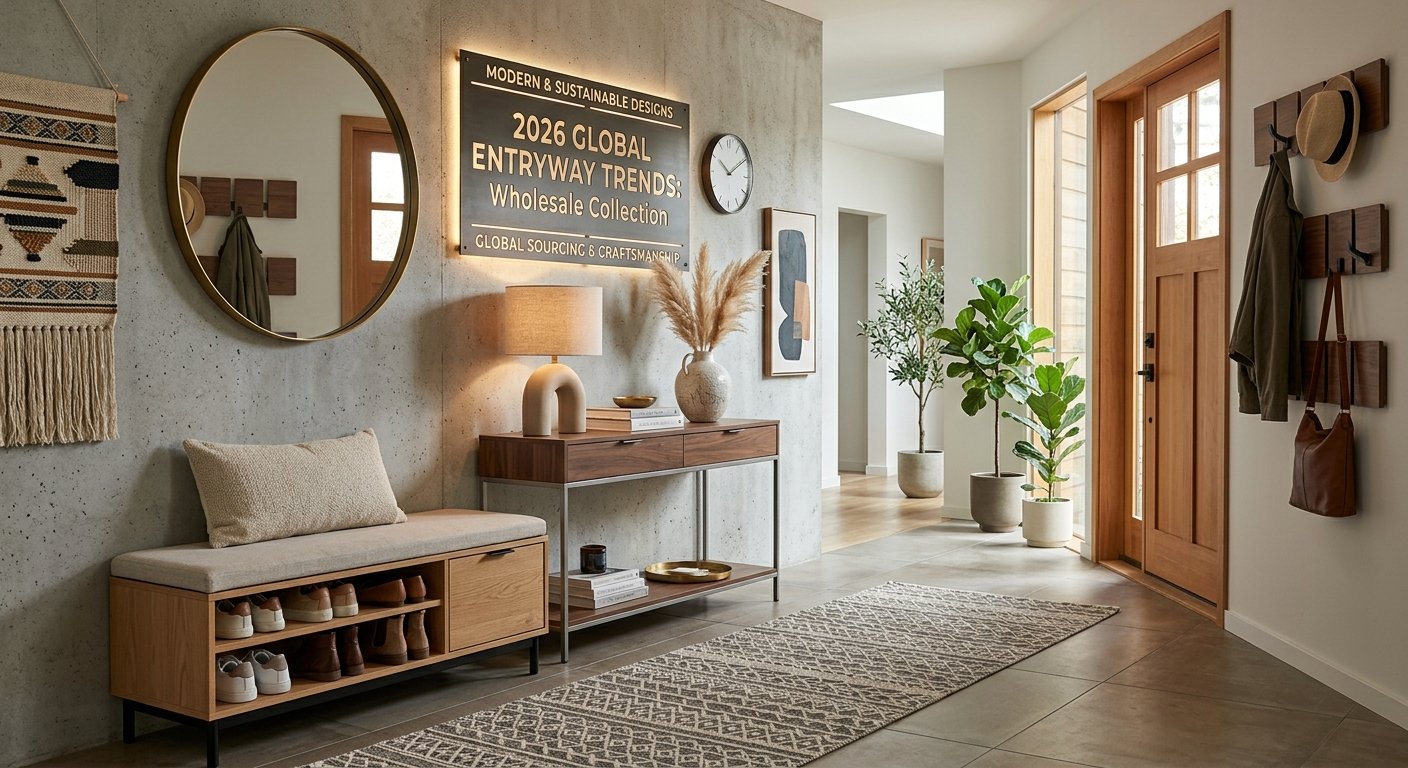
Storage ottomans have become the linchpin of entryway design because they combine seating, concealment, and style. Wholesale buyers should consider the following variations:
- Round vs. rectangular: Round ottomans soften sharp corridors, while rectangular forms align with linear wall treatments.
- Material mix: Upholstered cushions paired with solid wood or metal frames provide tactile contrast and increased durability.
- Modular stacking: Interlocking ottomans allow retailers to sell them as single units or stackable sets, expanding SKU flexibility.
When scouting suppliers, ask for storage ottoman wholesale pricing sheets that include weight‑capacity data, fabric abrasion ratings, and optional eco‑finish upgrades.
2.2 Custom Entryway Benches
Benches remain a staple, but the market now favors customization—both aesthetic and functional. Key customization points include:
- Scale: Adjustable height (10‑15 in) to accommodate varying user demographics.
- Integrated accessories: Built‑in coat hooks, shoe racks, or USB charging ports for modern homes.
- Finish options: Hand‑rubbed teak, matte powder‑coated metal, or reclaimed barn wood for a rustic vibe.
Importers looking for a partner that can turn design sketches into production‑ready samples will find Fuzhou Victor Furniture excels at delivering a custom entryway bench with tight tolerances and on‑time delivery.
2.3 Complementary Accessories
Beyond the primary furniture pieces, accessories such as wall‑mounted key trays, decorative mirrors, and shoe storage cubbies increase average order value. Many retailers prefer to source these items from the same manufacturer to streamline logistics and maintain visual consistency across a collection.
3. Sourcing Strategies and Quality Assurance for Global Importers
Choosing the right manufacturing partner in China is as critical as the product design itself. Below are proven steps to mitigate risk and guarantee product excellence.
3.1 Vetting a Reliable furniture manufacturer in China
When evaluating potential suppliers, consider:
- Factory certifications: ISO 9001 (quality management), ISO 14001 (environment), and BSCI (social compliance) are baseline expectations.
- Production capacity: Verify the ability to scale from 5,000 to 100,000 units per season without sacrificing lead‑time.
- Engineering support: Access to CAD designers and material scientists who can co‑develop custom molds, hardware, and finish specifications.
- Supply chain transparency: Request a full bill‑of‑materials (BOM) and traceability for raw timber, fabrics, and hardware.
Fuzhou Victor Furniture ticks every box, offering a dedicated account manager, in‑house R&D lab, and a proven track record of exporting to North America, Europe, and the Middle East.
3.2 Quality Control Protocols
Implement a three‑tier QC system:
- Pre‑production audit: Verify raw material certifications, workmanship standards, and tooling calibration before the first batch is cut.
- In‑process inspection: Randomly sample 5‑10 % of units during assembly to check dimensions, finish consistency, and hardware tightness.
- Final inspection & pre‑shipment testing: Conduct load‑bearing tests on benches, drop‑impact tests for ottoman cushions, and visual checks for surface defects. Use a third‑party lab for formal durability certification if required by the destination market.
Documenting these steps not only protects your brand but also facilitates smoother customs clearance in regions with strict consumer‑product safety regulations.
3.3 Logistics and Lead‑Time Optimization
To stay competitive, importers must align production schedules with retail calendars (e.g., back‑to‑school, holiday sales). Best practices include:
- Buffer inventory: Maintain a 2‑month safety stock for high‑volume SKUs like storage ottomans.
- Consolidated shipping: Use NVOCC services that combine multiple containers into a single ocean freight booking, reducing cost per CBM.
- Digital tracking: Integrate the manufacturer’s ERP with your own supply‑chain software for real‑time visibility of production milestones.
Conclusion – Positioning Your Portfolio for Success in 2026
The entryway furniture sector is poised for rapid growth thanks to urbanization, sustainability demands, and the rise of curated home collections. By focusing on high‑impact SKUs—such as storage ottoman wholesale and custom entryway bench—and partnering with a trusted furniture manufacturer in China, global importers can secure a competitive edge in the **entryway furniture wholesale** market.
Invest in rigorous quality assurance, leverage digital tools for seamless ordering, and align your supply chain with seasonal retail peaks. With these strategies, your 2026 wholesale portfolio will not only meet consumer expectations but also set new standards for style, sustainability, and functionality in the entryway market.
Ready to elevate your catalogue? Contact Fuzhou Victor Furniture today to explore exclusive wholesale rates and custom design services.